
-
Products
Pen Display SeriesPen Tablet SeriesAccessories
- Enterprise
- Community
- Support

A drawing tablet can have impressive specifications.
16,384 pressure levels.
4K resolution.
120Hz refresh rate.
Wide color gamut.
Low-latency pen technology.
All of those things can matter. But none of them can fully explain what it is actually like to use a device every day.
That is where real artists come in.
When someone spends six or eight hours drawing, animating, editing photographs, or working on a deadline, they experience a product very differently from someone reading its specification sheet. They notice how the pen feels after thousands of strokes, whether the shortcuts fit naturally into their workflow, whether the screen remains comfortable after a long session, and whether the device works smoothly with the software they rely on.
This is why, in digital art, real creators can sometimes tell you more than a page full of product claims.
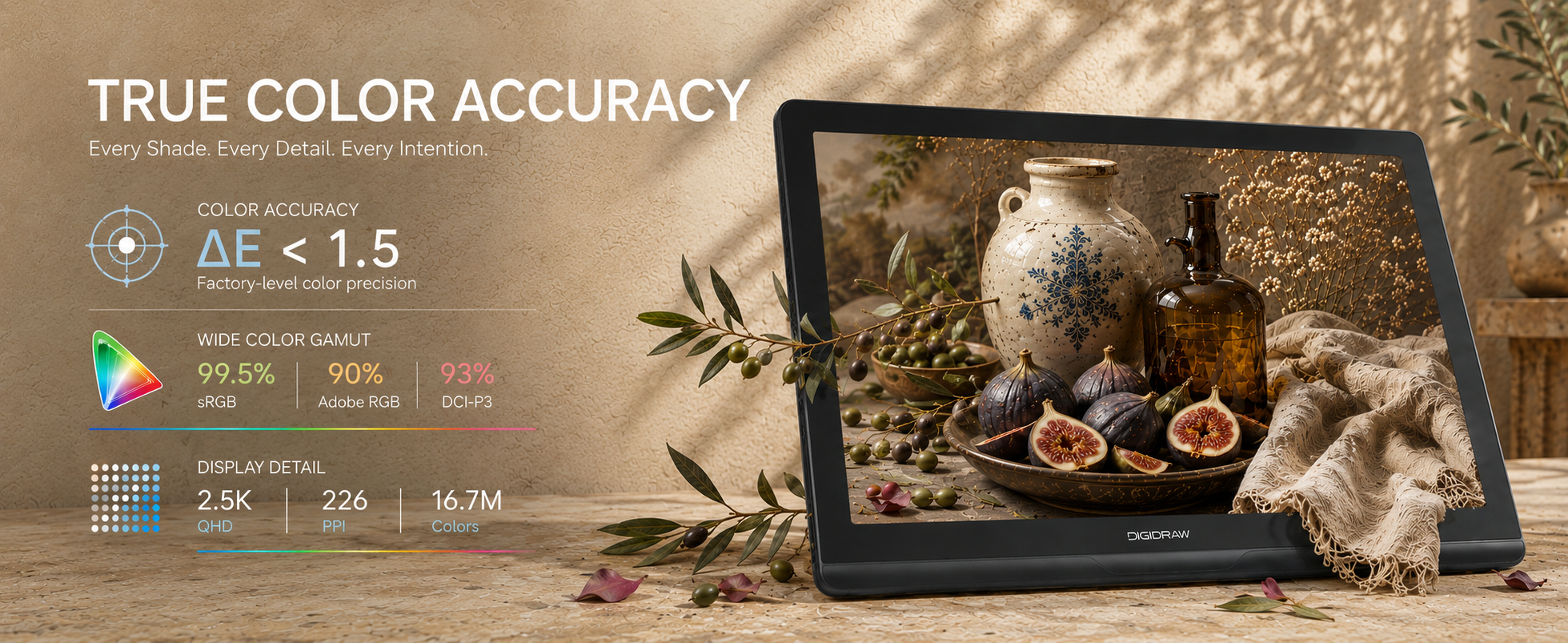 Marketing specifications are useful because they give buyers something concrete to compare.
Pressure sensitivity tells us how much variation a pen can detect. Resolution tells us how many pixels are available. Color gamut tells us how broad a display's color range can be.
But specifications rarely tell the whole story.
Consider two pens with similar technical specifications. On paper, they may appear almost identical. In practice, one might feel more predictable when sketching, while the other feels better for painting. One artist might prefer a particular grip, while another finds it uncomfortable after a few hours.
Neither experience is captured by a specification table.
That is why real-world demonstrations and creator feedback are so valuable. They add context to the numbers.
Instead of simply hearing that a pen supports a certain number of pressure levels, you can see how an illustrator actually uses those pressure changes to build a line, create shading, or paint a character.
Instead of being told that a screen is designed for professional work, you can see it being used in Photoshop, Clip Studio Paint, Blender, or another program during an actual creative workflow.
The difference is subtle, but important.
Specifications describe the product. Real creators describe the experience.
 One of the most interesting things about creative hardware is that artists tend to find uses and problems that are difficult to predict in a product development environment.
A designer may think about how many shortcut keys a device should have.
An illustrator may care more about whether those keys can be reached without changing hand position.
An engineer may focus on latency measurements.
An animator may simply say, "The stroke feels slightly behind when I work quickly."
A product team might measure the weight of a stylus.
A professional artist might tell you that the extra few grams become noticeable after a full day of drawing.
None of these perspectives are wrong. They are simply looking at the same product from different directions.
That is why creator feedback can be so useful.
Artists test products in messy, unpredictable, real environments. They use them while working on commissions, switching between software, rushing toward deadlines, experimenting with new techniques, and spending hours at a desk.
Those experiences reveal things that controlled testing cannot always capture.
There is a reason creator reviews and demonstrations have become such an important part of the digital art community.
Artists want to see products in context.
They want to know:
What does this actually look like on a real desk?
How does the pen behave during sketching?
Does the screen work well with the software I already use?
What happens after several hours of drawing?
A real creator can answer those questions naturally because they are showing the product as part of their process rather than as an isolated object.
That distinction matters particularly for newer brands.
Established names often come with years of recognition. An unfamiliar brand has to give potential buyers more reasons to trust what they are seeing.
A creator demonstration can help bridge that gap.
It does not replace technical information. It gives the technical information a human context.
There is also a difference between working with a creator once and actually building a relationship with creators over time.
A one-off collaboration might produce a video, a post, or a review.
A longer relationship can produce something much more useful: feedback.
An artist who has worked with the same type of device for months can point out things that are difficult to notice during a first impression.
Maybe a shortcut becomes part of their daily routine.
Maybe a particular screen size turns out to be better suited to their workflow.
Maybe a driver feature becomes unexpectedly important.
Maybe they discover a problem that the manufacturer had not considered.
Over time, this kind of feedback creates a loop:
Product → Creator → Experience → Feedback → Improvement
That is much more valuable than simply asking someone to repeat a list of selling points.
 DIGIDRAW has approached creator relationships as part of its broader brand-building efforts, including collaborations with real artists and influencers through social media and creator partnerships.
The value of those relationships is not limited to exposure.
Creators provide a different perspective on the products. They show how digital drawing hardware fits into real creative environments, and their work gives potential users a better sense of what a device can actually look like in practice.
For a brand operating in a category as personal as digital art, that matters.
The right drawing tool becomes part of an artist's routine. It sits next to their keyboard, appears in their studio, travels with them, and becomes part of how they learn and work.
Seeing another artist use a product in that environment can be much more meaningful than seeing the same product presented against a perfectly controlled studio background.
There is another reason real creator relationships matter.
Creative communities are bigger than the products sold to them.
Artists share knowledge, teach one another, collaborate on projects, publish work, experiment with new tools, and build careers through communities both online and offline.
For technology brands, participating in those communities can mean more than finding people to promote products.
It can mean supporting opportunities to create.
DIGIDRAW has also highlighted this broader approach through initiatives such as its anniversary support initiative for hearing-impaired individuals.
The importance of such efforts is not simply the publicity surrounding them.
They reflect a wider idea:
Creative technology should be connected to people, not only products.
A brand that understands this has the opportunity to become part of a creative community rather than simply selling into one.
The hardware industry often moves forward by making specifications larger.
More pressure levels.
Higher refresh rates.
More pixels.
Wider color gamuts.
But artists do not necessarily experience improvement as a bigger number.
Sometimes a meaningful improvement is much smaller.
A better pressure curve.
A more comfortable grip.
A driver that behaves reliably.
A shortcut that saves a few seconds every few minutes.
A screen that is easier to work on for an entire afternoon.
These details rarely make the biggest headline.
They can still make the biggest difference to the person using the product.
That is why creator feedback matters during product development. It helps companies distinguish between features that look impressive and improvements that are genuinely useful.
The expectations are not particularly complicated.
Artists want products that work.
They want honest information.
They want support when something goes wrong.
They want companies to listen when they have feedback.
And they want to know that the people developing the tools understand the reality of creative work.
That does not mean every suggestion can be implemented.
A product cannot be designed around every individual preference.
But there is value in listening carefully enough to understand why creators are asking for something in the first place.
Sometimes the request reveals a larger problem.
"Can you add another shortcut key?" might really mean:
"I need a faster way to switch between tools."
"Can you make the pen lighter?" might really mean:
"I draw for eight hours a day and my hand gets tired."
"Can you improve compatibility?" might really mean:
"I don't want my hardware getting in the way of my workflow."
The best product development turns those individual comments into broader insights.
Digital art hardware is becoming increasingly sophisticated, but the most interesting shift may not be technological.
It is cultural.
Artists are no longer just buyers. They are educators, reviewers, community leaders, influencers, and collaborators.
Their feedback can shape how products are understood and, eventually, how products are developed.
For brands, that means creator relationships should not be treated only as a marketing channel.
They can also be a source of knowledge.
For artists, it means having a more direct voice in the tools they use every day.
That is a healthier relationship for everyone.
A good drawing tablet can help an artist draw.
A good drawing tablet brand should go one step further.
It should listen to the people using the tool, understand the environments in which they work, and recognize that creative technology is ultimately about human expression.
The specification sheet still matters.
Reviews still matter.
Demonstrations still matter.
But the most useful information often comes from somewhere simpler:
a real person explaining what happened when they actually used the product.
That is why real artists matter more than product claims.
They do not replace technology.
They give technology context.


